
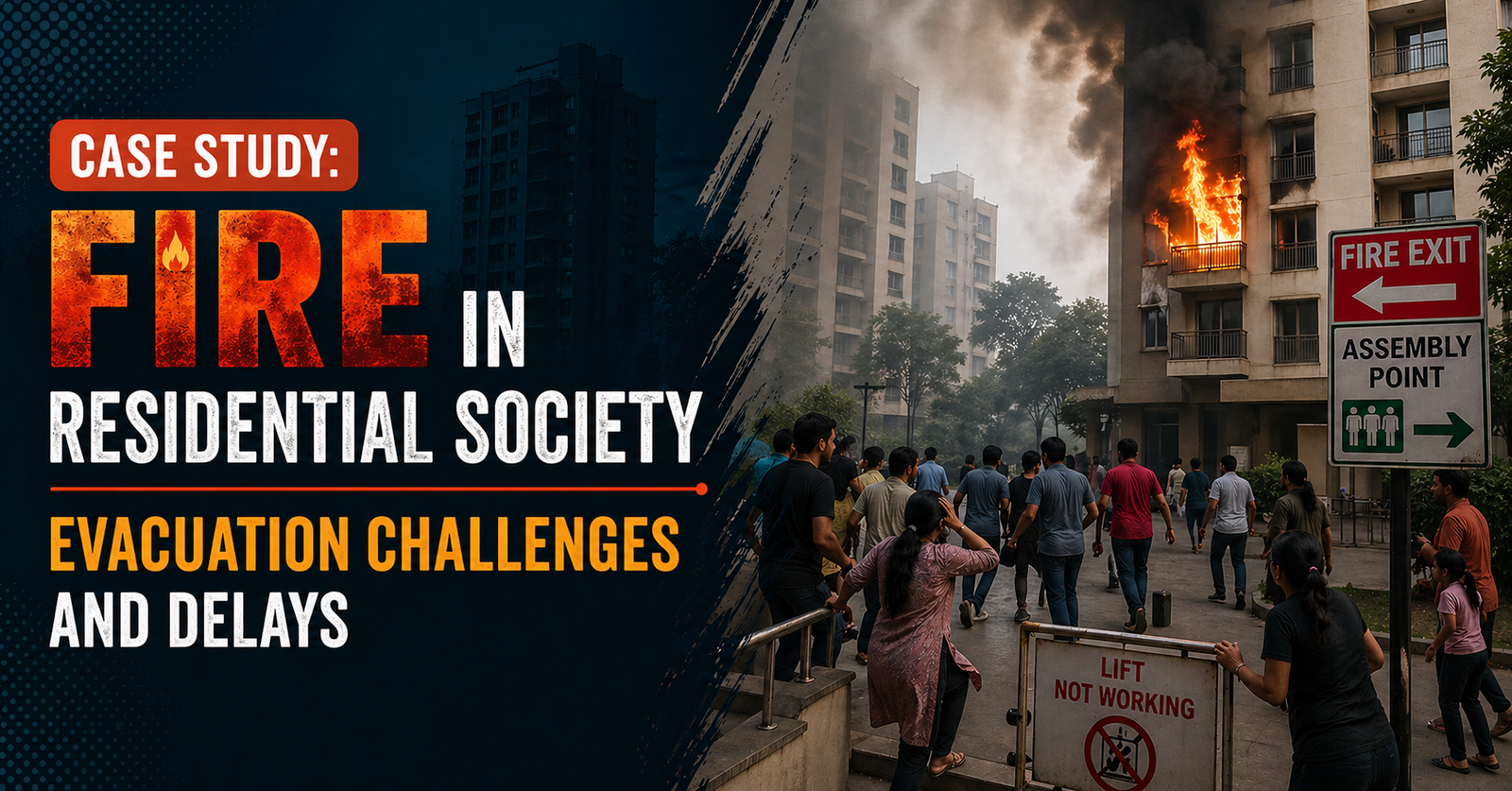
Case Study: Fire in Residential Society – Evacuation Challenges and Delays
It was an ordinary evening—until smoke began filling the corridors. Incidents like these remind us that residential fire evacuation is not just a safety protocol, but a life-saving necessity. In many societies, people assume they are prepared, but when panic strikes, even basic residential fire evacuation becomes chaotic and delayed. The reality is harsh—without proper planning, residential fire evacuation can turn into confusion, putting hundreds of lives at risk within minutes.
Incident Overview: What Happened in Pune
In a residential society located in Wakad, Pune, a fire broke out in the basement parking area due to an electrical short circuit in a two-wheeler. Within minutes, thick smoke started spreading through the building shafts and staircases. Residents from multiple floors were trapped, unable to understand the severity of the situation initially.
The incident quickly exposed gaps in society fire safety, as there was no immediate clarity on evacuation procedures or emergency coordination.
The Escalation: How the Fire Spread
The fire itself was initially small—but the smoke turned deadly. Due to poor ventilation and lack of smoke control systems, toxic fumes spread rapidly across floors. Many residents delayed evacuation, assuming it was a minor issue.
This hesitation resulted in a significant building evacuation delay, which made the situation worse. Families with children and elderly members struggled to navigate smoke-filled corridors, leading to panic and disorientation.
System & Human Failures
As the situation intensified, multiple failures became evident:
- The fire alarm system either didn’t trigger on time or was ignored
- Fire extinguishers were either inaccessible or not maintained
- Residents were unaware of emergency exits and assembly points
This clearly highlighted a major fire safety system failure, where installed systems existed—but didn’t function effectively during a real emergency.
At the same time, the lack of training impacted fire emergency response, as residents and staff were unsure how to react quickly and correctly.
Root Cause Analysis: What Went Wrong
A deeper look into the incident revealed multiple contributing factors:
- Lack of regular fire drills and awareness sessions
- Poor maintenance of firefighting equipment
- Absence of clear evacuation signage and guidance
- Underestimation of apartment fire risk, especially in parking areas
The biggest issue wasn’t just the fire—it was the unpreparedness that allowed the situation to escalate.
What Could Have Prevented This?
This incident could have been controlled much earlier with the right measures:
- Regular fire extinguisher inspection and refilling
- Functional alarm and detection systems
- Clearly marked evacuation routes
- Conducting periodic mock drills for residents
- Professional fire safety audits
Implementing these steps ensures that residential fire evacuation becomes faster, smoother, and more effective when it matters most.
Conclusion: Safety Is Not Optional—It’s Urgent
This case study is a wake-up call for every residential society. Fires don’t wait—and neither should your preparedness. What happened in Wakad could happen anywhere. The difference between safety and disaster often comes down to awareness, maintenance, and quick action.
Don’t wait for an incident to expose the gaps. Strengthen your systems, train your people, and prioritize fire safety today—because in an emergency, every second counts, and every delay can cost lives.