
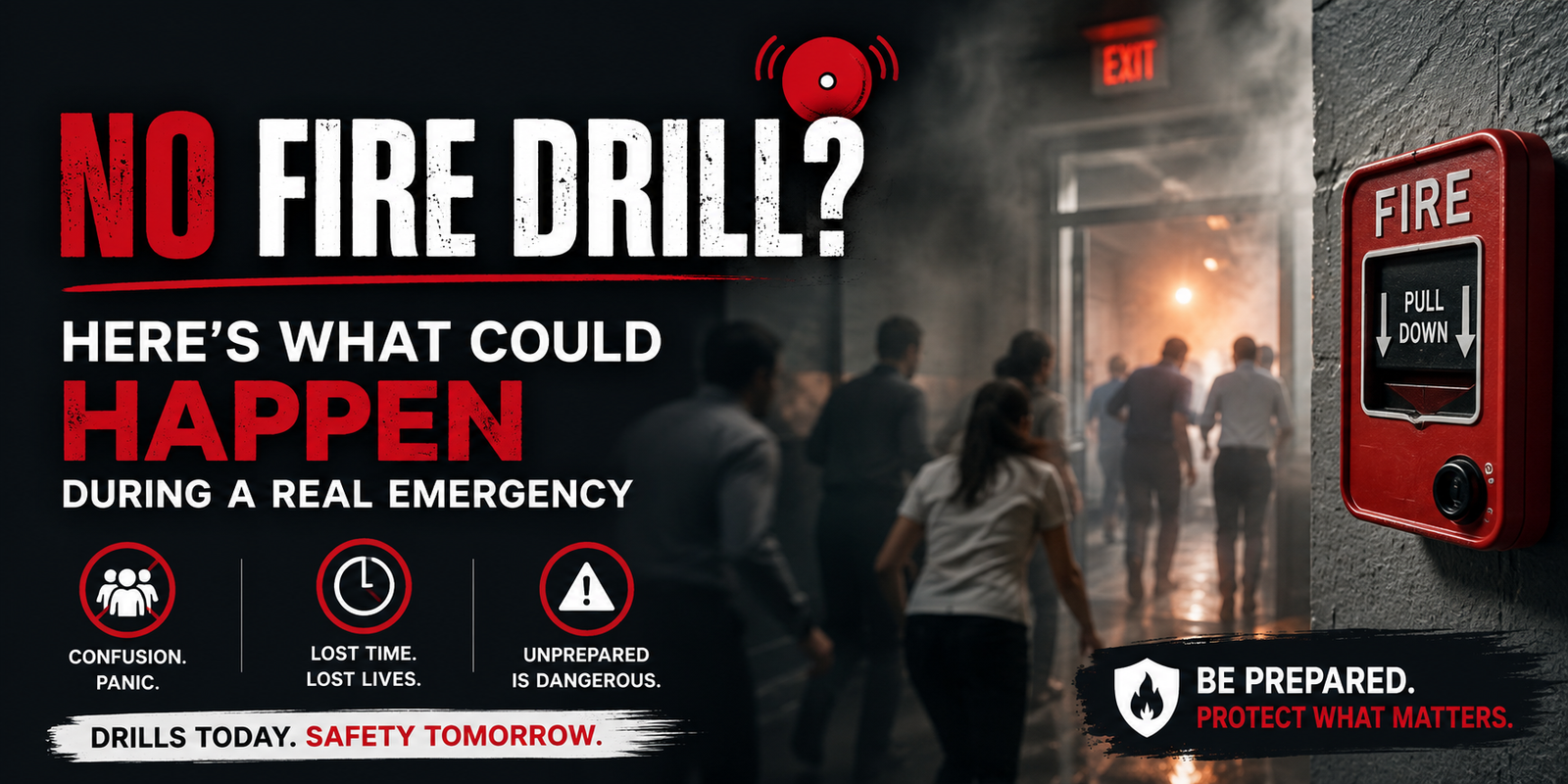
No Fire Drill? Here’s What Could Happen During Emergency
Most businesses invest in fire extinguishers, alarms, and CCTV systems, but many ignore one critical safety activity — fire drills. The truth is, no fire drill consequences can be far more dangerous than most people realize. During a real emergency, panic spreads within seconds, and without proper training, people often do not know where to go or what to do.
The biggest issue with no fire drill consequences is confusion. Employees may rush toward blocked exits, ignore safety instructions, or waste precious time collecting belongings instead of evacuating safely. In crowded workplaces, factories, schools, or residential buildings, this confusion can quickly turn into tragedy.
Many organizations assume emergencies will never happen to them. However, fires can start because of electrical faults, overheating equipment, gas leaks, or human error.
Why Fire Drills Matter More Than You Think
A fire drill is not just a routine activity done to satisfy compliance requirements. It is a life-saving exercise that prepares people to react calmly under pressure. The importance of fire drill programs becomes clear during actual emergencies, where every second matters.
Regular drills help people:
- Identify the nearest emergency exits
- Understand evacuation procedures
- Learn how to respond without panic
- Improve coordination during emergencies
- Reduce evacuation time significantly
When employees repeatedly practice emergency procedures, their response becomes faster and more organized during real incidents.
Panic Is the First Danger During a Fire
One of the biggest risks during a fire emergency is panic. Smoke, alarms, and sudden chaos can cause people to freeze or make dangerous decisions.
Without proper preparation, employees may:
- Run toward elevators
- Crowd a single exit
- Ignore safety instructions
- Push others while escaping
- Return inside to collect valuables
This is where emergency evacuation preparedness becomes essential. Proper planning and regular drills help people stay calm and move safely toward designated assembly points.
Delayed Response Can Cost Lives
In many real fire incidents, the damage becomes severe not because the fire was uncontrollable, but because evacuation started too late.
When people are unfamiliar with emergency procedures:
- Valuable evacuation time is lost
- Rescue operations become difficult
- Firefighters face additional risks
- Smoke inhalation injuries increase
A trained workforce reacts immediately when alarms sound. They know evacuation routes, emergency contacts, and assembly locations. This is why organizations must focus on proper workplace fire safety training rather than relying only on firefighting equipment.
Small Mistakes Become Big Disasters
Even minor confusion during an emergency can create life-threatening situations. For example:
-Blocked Exit Routes
Employees who never participated in drills may not know alternative escape routes if the main exit is blocked.
-Miscommunication
Without clear instructions, people may spread incorrect information, increasing panic across the workplace.
-Unsafe Firefighting Attempts
Some individuals may try to control the fire without proper training, putting themselves and others in danger.
A strong fire emergency response plan helps businesses assign responsibilities clearly and ensure everyone understands their role during a crisis.
Fire Drills Help Find Hidden Safety Gaps
One major benefit of conducting drills is identifying weaknesses before a real emergency occurs.
During drills, organizations often discover:
- Locked emergency exits
- Faulty alarm systems
- Poor evacuation coordination
- Lack of employee awareness
- Unsafe assembly areas
These issues may remain unnoticed until a real fire happens. Conducting regular drills improves overall mock fire drill safety awareness and helps organizations fix safety gaps early.
Legal and Financial Risks of Ignoring Fire Drills
Ignoring fire drills can also create serious legal and financial problems for businesses.
Companies may face:
- Heavy penalties from authorities
- Insurance claim complications
- Business interruption losses
- Reputation damage
- Legal action after accidents
Many fire safety regulations require organizations to conduct periodic fire drills and employee safety training. Failure to comply can lead to severe consequences after an incident.
Real Emergencies Never Give Warning Signs
Fires do not happen according to schedules. A small electrical spark, overheated machine, or unattended equipment can trigger a major emergency within minutes.
During such situations, preparation becomes the only difference between safe evacuation and chaos. Organizations that conduct regular drills build confidence among employees and create a safer working environment for everyone.
The reality is simple — no fire drill consequences are often discovered only after a disaster happens. By then, it may already be too late.
Conclusion
Imagine being trapped inside a smoke-filled building with alarms ringing everywhere, but nobody knows where to go. That fear, confusion, and panic are exactly what regular fire drills are meant to prevent.
As employees, residents, students, or business owners, we all expect safety during emergencies. But safety does not happen automatically — it comes from preparation, awareness, and practice. Ignoring fire drills may save a few minutes today, but during a real emergency, those lost minutes could cost lives.
A simple drill may feel routine, but in reality, it prepares people to survive when every second matters.