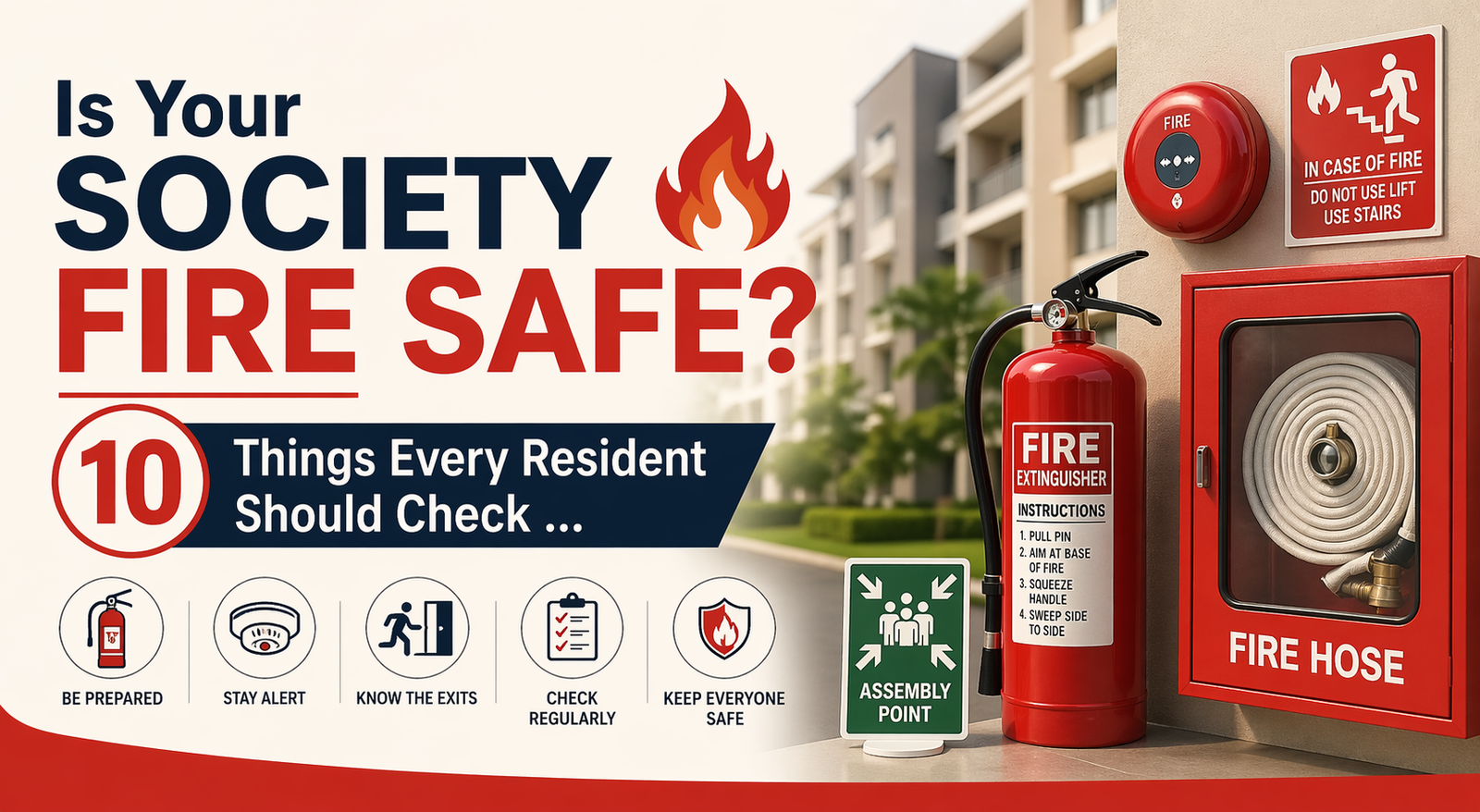
Is Your Society Fire Safe? 10 Things Every Resident Should Check
Are you truly safe in your own home, or are hidden fire risks putting your entire building at risk? Every resident should take a moment to review a proper society fire safety checklist, because ignoring fire hazards can have devastating consequences. A well-prepared society fire safety checklist not only saves lives but also ensures compliance with safety norms. In fact, following a structured society fire safety checklist is one of the simplest ways to protect your family and your neighbors.
1. Are Fire Extinguishers Installed and Functional?
Fire extinguishers are your first line of defense during a fire emergency. Check whether they are placed on every floor and in common areas like parking zones and lobbies. It’s equally important to ensure they are regularly serviced and not expired. A non-functional extinguisher is as good as having none.
2. Is There a Working Fire Alarm System?
An effective fire alarm system can save lives by providing early warning. Make sure your society has a properly installed and regularly tested alarm system. Residents should also be familiar with the alarm sound and know how to respond immediately.
3. Are Emergency Exits Clear and Accessible?
Blocked or locked emergency exits are one of the biggest hazards in residential buildings. Staircases and exit routes should always be free from obstacles like furniture, cycles, or storage items. Following proper residential building fire safety rules ensures these exits remain usable during emergencies.
4. Are Fire Drills Conducted Regularly?
Fire drills are not just for offices—they are crucial for residential societies too. Regular drills help residents understand evacuation procedures and reduce panic during real incidents. They also reveal gaps in the current safety plan.
5. Is Electrical Wiring Well Maintained?
Faulty wiring is a leading cause of residential fires. Regular inspections should be conducted to identify loose connections, overloaded circuits, or outdated wiring systems. Residents should avoid using damaged appliances or illegal connections.
6. Are Fire Hydrants and Hose Reels Working?
Fire hydrants and hose reels are essential for controlling fires before they spread. Ensure they are easily accessible and maintained properly. Many societies install them but fail to keep them operational over time.
7. Is Basement Parking Safe?
Parking areas often become fire hazards due to fuel leaks and improper storage. Make sure there are no flammable materials stored in parking zones. Adequate ventilation and fire detection systems should be in place, especially in high-rise building fire safety India standards.
8. Are LPG Cylinders and Kitchens Safe?
Improper handling of LPG cylinders can lead to dangerous explosions. Residents should regularly check for gas leaks and ensure proper ventilation in kitchens. Simple precautions can prevent major accidents.
9. Does Your Society Follow Safety Compliance?
Every residential complex must adhere to society fire safety requirements set by local authorities. This includes approvals, safety audits, and installation of necessary firefighting equipment. Non-compliance can put all residents at risk.
10. Are Residents Aware and Trained?
Even the best systems fail if people don’t know how to use them. Awareness programs and training sessions should be conducted to educate residents. A well-informed community is the strongest defense against fire hazards and forms a complete fire safety checklist for residents.
Conclusion
Fire safety is not just a checklist—it’s a shared responsibility. While management plays a role in infrastructure and compliance, residents must stay alert and proactive. Revisiting your society fire safety checklist regularly can help you identify risks early and take corrective action. A safe society is not built overnight, but through consistent awareness, maintenance, and participation.
Don’t wait for an emergency to realize the importance of fire safety. Start checking today—because when it comes to fire, prevention is always better than cure.