
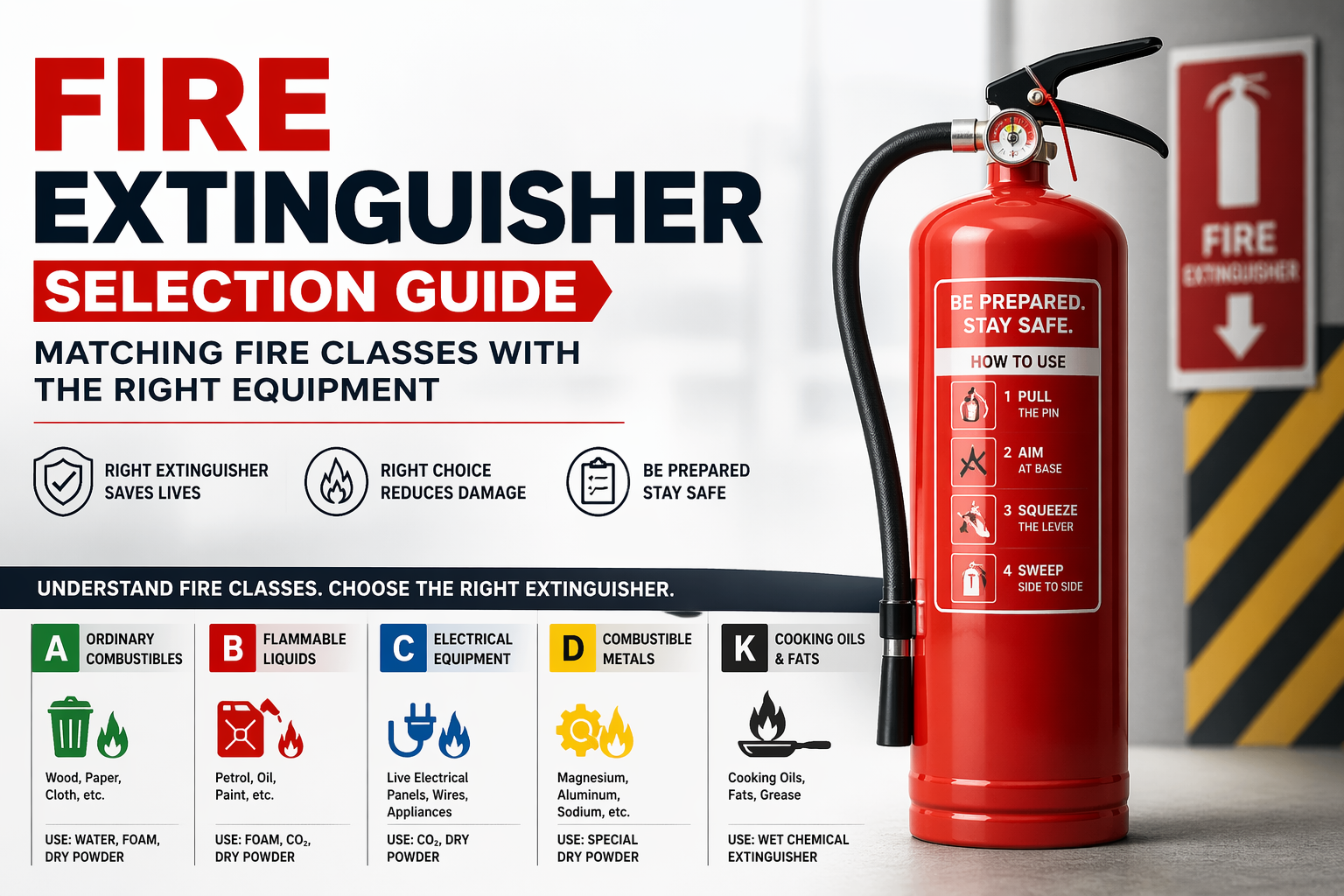
Fire Extinguisher Selection Guide: Matching Fire Classes with the Right Equipment
Stop Guessing. Start Choosing Right
A fire doesn’t give you a warning. It doesn’t wait for instructions. It spreads in seconds—and in that moment, the only thing standing between control and catastrophe is the right extinguisher. Sounds dramatic? It should.
Most people think any extinguisher will do the job. That’s the biggest mistake. Using the wrong one can actually make the fire worse, faster, and more dangerous. That’s exactly why this fire extinguisher selection guide exists—to help you act smart, not just fast.
In this fire extinguisher selection guide, you’ll discover how different fires demand different responses, why guessing is risky, and how choosing the right equipment can literally save lives and property. Because a proper fire extinguisher selection guide is not just about compliance—it’s about survival.
Understanding Fire: Not All Fires Are the Same
Before choosing an extinguisher, you need to understand one simple truth:Fire behaves differently depending on what’s burning.
That’s where fire classes come in.
📊 Fire Classes and What They Mean
- Class A – Ordinary combustibles (wood, paper, cloth)
- Class B – Flammable liquids (petrol, diesel, paint)
- Class C – Electrical fires (live equipment)
- Class D – Metals (magnesium, aluminum)
- Class K/F – Cooking oils and fats
Knowing this is the foundation of any fire classes and extinguishers chart—and without it, you’re just guessing.
Types of Fire Extinguishers and Their Uses
Now let’s match fire types with the right tools. Because choosing wrong isn’t just ineffective—it can be dangerous.
💧 Water Extinguishers
- Best for: Class A fires
- Avoid: Electrical and flammable liquid fires
- Why: Water spreads liquid fires and conducts electricity
🌫️ Foam Extinguishers
- Best for: Class A & B fires
- Use case: Offices, warehouses
- Why: Forms a blanket over flammable liquids
🧪 Dry Powder Extinguishers (ABC Type)
- Best for: Multi-purpose use (A, B, C fires)
- Most common in: Industrial and commercial areas
- Why: Versatile and fast-acting
🍳 Wet Chemical Extinguishers
- Best for: Kitchen fires (Class K/F)
- Use in: Restaurants, canteens
- Why: Cools and prevents re-ignition
How to Choose the Right Fire Extinguisher
Choosing isn’t random—it’s strategic. Here’s how to do it right:
1. Identify Your Risk Area
Is it an office? Warehouse? Kitchen? Electrical room? Each environment demands a different solution.
2. Understand the Fire Load
What materials are present? Paper? Chemicals? Oil? Electricity?
3. Check Compliance Requirements
Local fire safety laws often mandate specific extinguishers.
4. Train Your Team
Even the best extinguisher is useless if no one knows how to use it.
5. Keep It Accessible & Maintained
Blocked or expired extinguishers = zero protection.
This is the real essence of how to choose the right fire extinguisher—not just buying one, but choosing wisely.
The Biggest Mistake People Make
Buying a single extinguisher and assuming it covers everything.
Reality? It doesn’t. Different fire scenarios require different solutions. That’s why understanding fire extinguisher types for different fires is critical—not optional.
Real Talk: Why This Matters More Than You Think
Imagine this:
An electrical panel catches fire. Someone grabs a water extinguisher. Within seconds, it turns into a shock hazard.
Now imagine the same situation—with the right extinguisher. Contained. Controlled. No damage escalation.
That’s the power of the right choice.
Conclusion: Don’t Just Install—Understand
Fire safety isn’t about ticking a box—it’s about making the right decisions before a crisis hits.
This fire extinguisher selection guide isn’t just information—it’s a practical tool to protect lives, assets, and businesses. The right extinguisher, used correctly, can stop a disaster before it begins.
So next time you see a fire extinguisher on the wall, ask yourself:
“Is this the right one… for the fire I might face?”
Because in fire safety, the difference between having and having the right one is everything.