
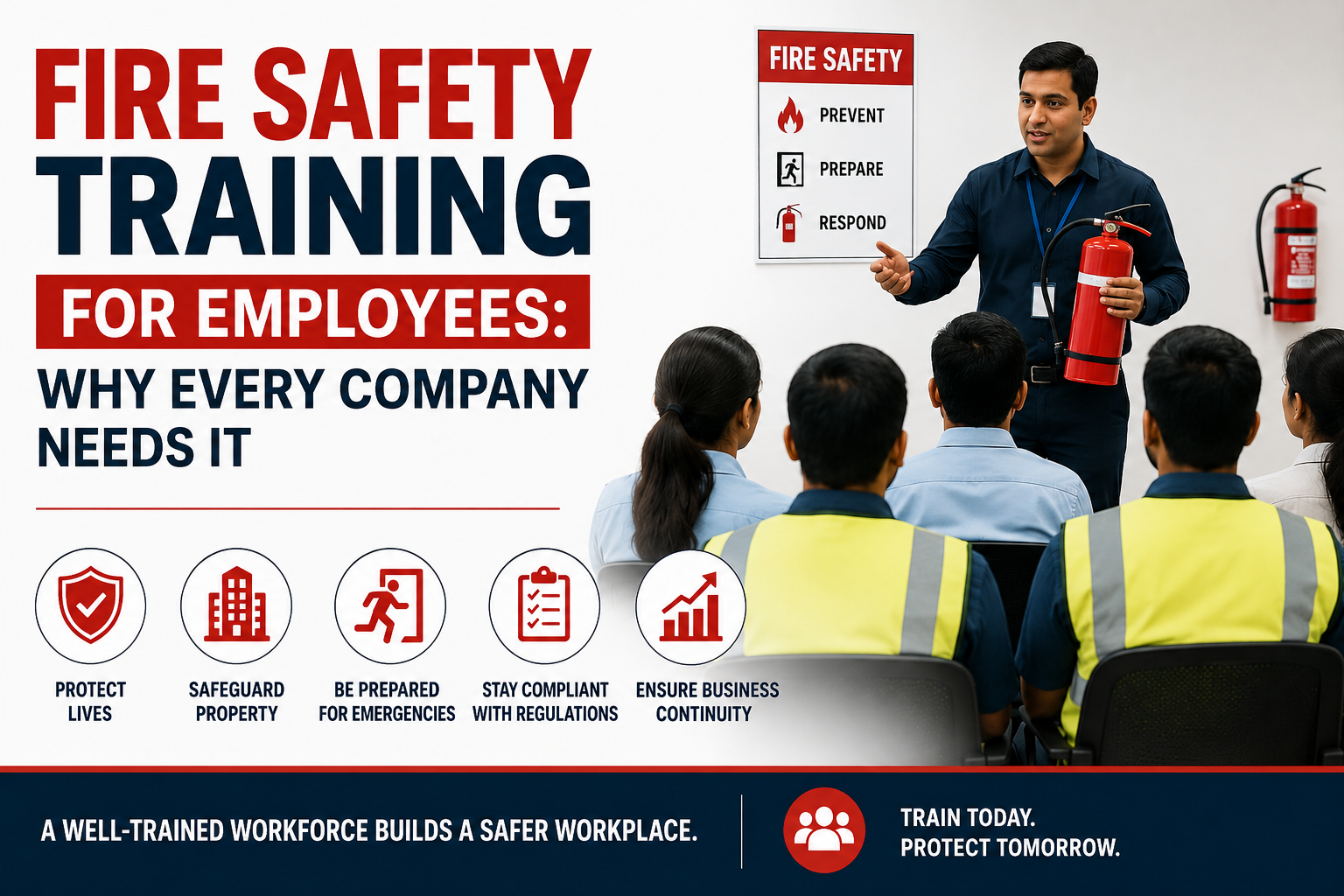
Fire Safety Training for Employees: Why Every Company Needs It
Fire safety for employees is an essential responsibility for every organization, regardless of its size or industry. Offices, factories, warehouses, hospitals, and commercial establishments all face fire-related risks that can endanger lives, disrupt operations, and cause significant property damage. A minor fire incident can quickly escalate into a major emergency if employees are not equipped with the right knowledge and response skills.
This comprehensive guide explores the importance of employee fire safety, the legal requirements surrounding workplace fire protection, and the key steps organizations can take to implement effective fire safety training programs. By promoting awareness and preparedness, businesses can create a safer work environment while ensuring compliance with fire safety regulations.
What Is Fire Safety for Employees?
Fire safety for employees encompasses the policies, training programs, safety measures, and emergency procedures implemented to protect workers from fire-related risks in the workplace. It involves identifying potential fire hazards, promoting fire prevention practices, establishing evacuation procedures, and ensuring employees are trained to use fire safety equipment such as fire extinguishers, alarm systems, and emergency exits effectively.
The primary goal of employee fire safety is to create a safe working environment by preventing fire incidents, ensuring a swift and organized response during emergencies, facilitating safe evacuation, and reducing the risk of injuries, fatalities, business disruption, and property loss. A well-trained workforce plays a critical role in minimizing the impact of fire emergencies and enhancing overall workplace safety.
Why Fire Safety for Employees Is Important
Effective fire safety training empowers employees to respond confidently during emergencies and significantly reduces the risk of injuries and property damage. Here’s why every workplace should prioritize fire safety for employees:
1. Increases Awareness and Preparedness
Understanding the causes of workplace fires is the first step toward prevention. Through fire safety training, employees learn:
- Common workplace fire hazards
- Fire prevention techniques
- Emergency evacuation procedures
- Safe use of fire extinguishers
As a result, employees can make informed decisions and avoid panic when an emergency occurs.
2. Improves Employee Safety During Fire Emergencies
Fire safety training equips employees with the skills and confidence needed to respond appropriately during fire emergencies.
- How to move safely in smoke-filled areas
- How to identify safe exit routes
- When and how to use firefighting equipment
As a result, employees are better equipped to stay safe and avoid serious injuries during a fire incident.
3. Minimizes Property Damage and Business Downtime
A quick and informed response from trained employees can stop a minor fire from escalating into a serious workplace incident. Early intervention helps:
- Control fire spread
- Protect workplace assets
- Reduce operational downtime and financial loss
Fire Safety Responsibilities of Employees
Every employee contributes to creating a safer workplace by actively supporting fire safety practices. Their responsibilities include:
- Reporting fire hazards immediately
- Keeping exits and staircases clear
- Knowing evacuation routes and assembly points
- Following fire warden instructions
- Using fire extinguishers only when trained
Fire Safety Compliance for Employees
In India, workplace fire safety requirements are governed by the National Building Code (NBC), state fire regulations, and directives issued by local fire authorities. Employers are legally responsible for:
- Providing fire safety training
- Conducting fire drills
- Maintaining evacuation systems
Benefits of Fire Safety for Employees
- Creates a safer work environment
- Reduces workplace accidents and injuries
- Ensures legal and regulatory compliance
- Protects business assets and operations
- Builds a proactive safety culture
How Long Fire Safety Training Is Valid For
While fire safety training does not have a universally fixed validity period, organizations should conduct refresher training at regular intervals to ensure employees remain aware of current fire safety procedures and emergency response protocols. High-risk workplaces, such as manufacturing facilities, warehouses, and areas handling hazardous materials, may require more frequent training. Fire Wardens and Fire Marshals should also receive updated training whenever there are changes to building layouts, evacuation plans, fire protection systems, or staff responsibilities.
Conclusion
Fire safety is not just a regulatory requirement—it is an essential investment in employee well-being and workplace protection. A knowledgeable and well-trained workforce can help prevent fire incidents, ensure a swift and organized response during emergencies, and minimize the impact of fire-related risks. By prioritizing fire safety training, implementing effective emergency procedures, and maintaining compliance with fire safety regulations, organizations can build a safer, more secure, and resilient workplace for everyone.