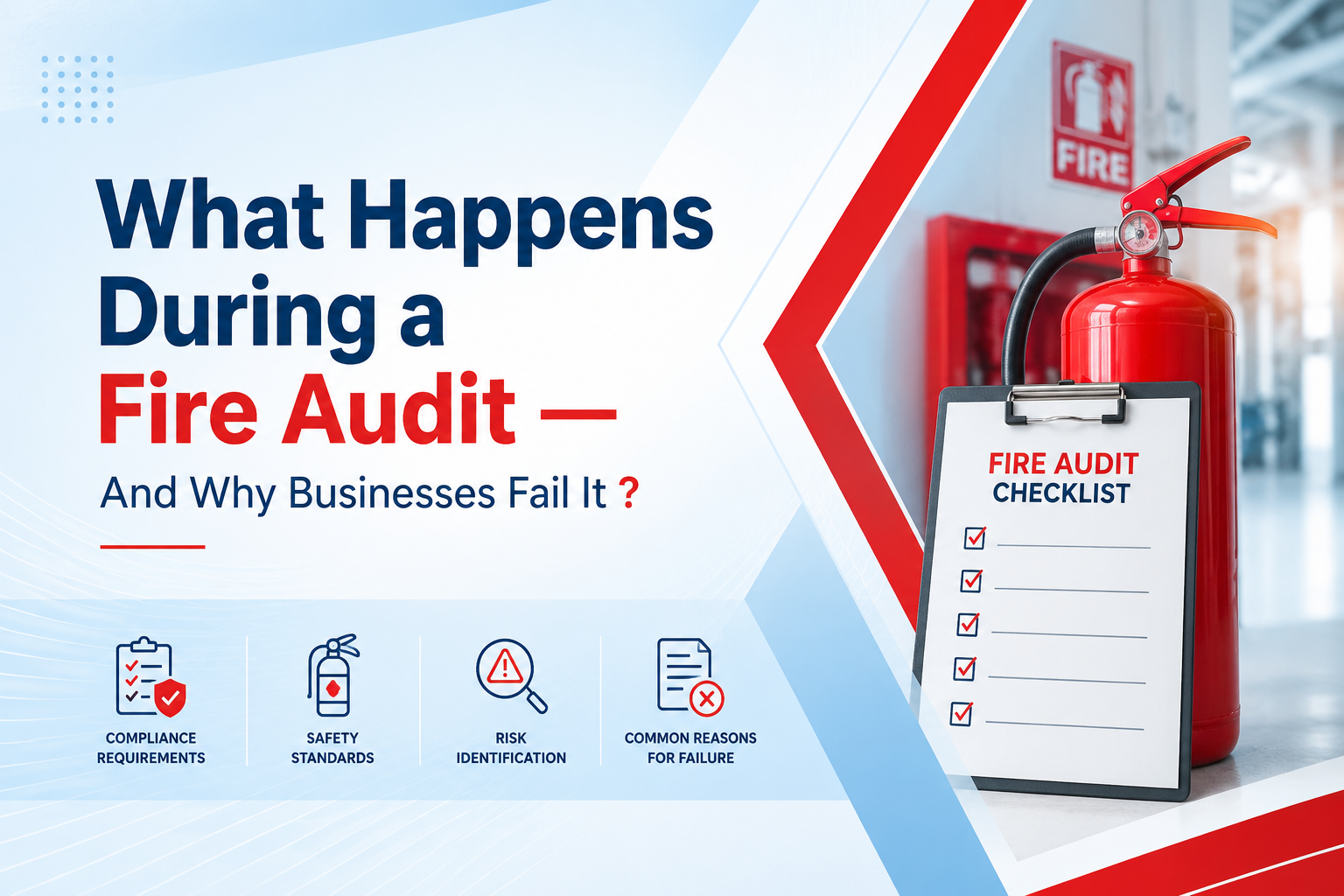
What Happens During a Fire Audit — And Why Businesses Fail It ?
Fire accidents can damage property, stop business operations, and put lives at risk within minutes. That is why every company today must understand the importance of a fire audit for businesses. Many organizations believe they are fully protected until an actual inspection reveals serious safety gaps. A proper fire audit for businesses helps identify hidden hazards, improve emergency preparedness, and ensure legal compliance. Whether it is a small office, warehouse, factory, or commercial building, a professional fire audit for businesses can prevent costly mistakes before they turn into disasters.
Unfortunately, many companies fail fire audits because they ignore basic safety measures, delay maintenance, or do not train employees properly. In this blog, we will explain what happens during a fire audit and the most common reasons businesses fail it.
What Is a Fire Audit?
A fire audit is a detailed inspection conducted to evaluate the fire safety systems, emergency preparedness, and overall safety standards of a building or workplace. The goal is to identify risks and ensure the property follows fire safety regulations.
A professional audit checks everything from extinguishers and alarms to emergency exits and evacuation plans.
What Happens During a Fire Audit?
1. Inspection of Fire Safety Equipment
Auditors first check all firefighting equipment such as:
- Fire extinguishers
- Smoke detectors
- Fire alarms
- Sprinkler systems
- Hydrant systems
They verify whether the equipment is working properly, serviced regularly, and installed in the right locations.
2. Review of Emergency Exit Routes
Blocked or poorly marked exits are one of the biggest safety concerns. Auditors inspect:
- Emergency exit accessibility
- Exit signage visibility
- Staircase safety
- Emergency lighting systems
Businesses often fail because exit pathways are blocked with furniture or storage items.
3. Evaluation of Electrical Safety
Electrical faults are among the leading causes of workplace fires. During a commercial fire inspection, auditors examine:
- Overloaded circuits
- Damaged wiring
- Unsafe extension boards
- Electrical panel conditions
Poor maintenance can easily become a fire hazard.
4. Verification of Safety Documents
Auditors also review important records, including:
- Fire equipment maintenance logs
- Employee fire drill reports
- Fire NOC documents
- Emergency response plans
Missing or outdated documents can create compliance issues.
5. Employee Fire Safety Awareness Check
A building may have advanced safety systems, but untrained employees can still increase risk. Auditors check whether staff members know:
- How to use fire extinguishers
- Emergency evacuation procedures
- Fire reporting methods
- Assembly point locations
This is a major part of maintaining workplace fire safety compliance.
Why Businesses Fail Fire Audits
-Ignoring Regular Maintenance
Many companies install fire systems but forget regular servicing. Non-functional extinguishers or alarms immediately raise red flags during inspections.
-Blocked Emergency Exits
Emergency exits must remain clear at all times. Even temporary obstructions can result in audit failure.
-Lack of Staff Training
Employees who panic during emergencies or do not know evacuation procedures indicate poor preparedness.
-Expired Fire Extinguishers
Expired or damaged extinguishers are among the most common fire safety issues found during audits.
-Poor Storage Practices
Storing flammable materials near electrical systems or heat sources increases fire risk significantly.
-Incomplete Fire Safety Planning
Businesses without a proper fire risk assessment for companies often fail to identify hidden dangers within their premises.
Common Fire Safety Violations Found During Audits
Some of the most frequent common fire safety violations include:
- Missing fire extinguisher signage
- Non-functional smoke detectors
- Locked emergency exits
- Faulty electrical wiring
- Lack of evacuation maps
- Improper chemical storage
Even small violations can lead to penalties and serious safety risks.
Importance of a Fire Safety Audit Checklist
Using a proper fire safety audit checklist helps businesses stay prepared throughout the year. A checklist ensures that:
- Equipment inspections happen regularly
- Safety records remain updated
- Emergency systems stay operational
- Staff training is conducted on time
Regular audits reduce risk and improve workplace safety standards.
How Businesses Can Pass a Fire Audit
Here are some practical tips:
- Conduct regular fire drills
- Service fire equipment on schedule
- Train employees on emergency response
- Keep exits clear and visible
- Inspect electrical systems regularly
- Update safety documents frequently
A proactive approach always improves audit performance.
Final Thoughts
Fire audits are not just about following rules. They are about protecting employees, customers, property, and business continuity. A failed audit can lead to penalties, operational shutdowns, and increased fire risk. Taking fire safety seriously today can prevent major losses tomorrow.
Looking for best fire audit services in Navi Mumbai?
📞 Call: 9324259477
📧 Mail: sales@oustfire.com