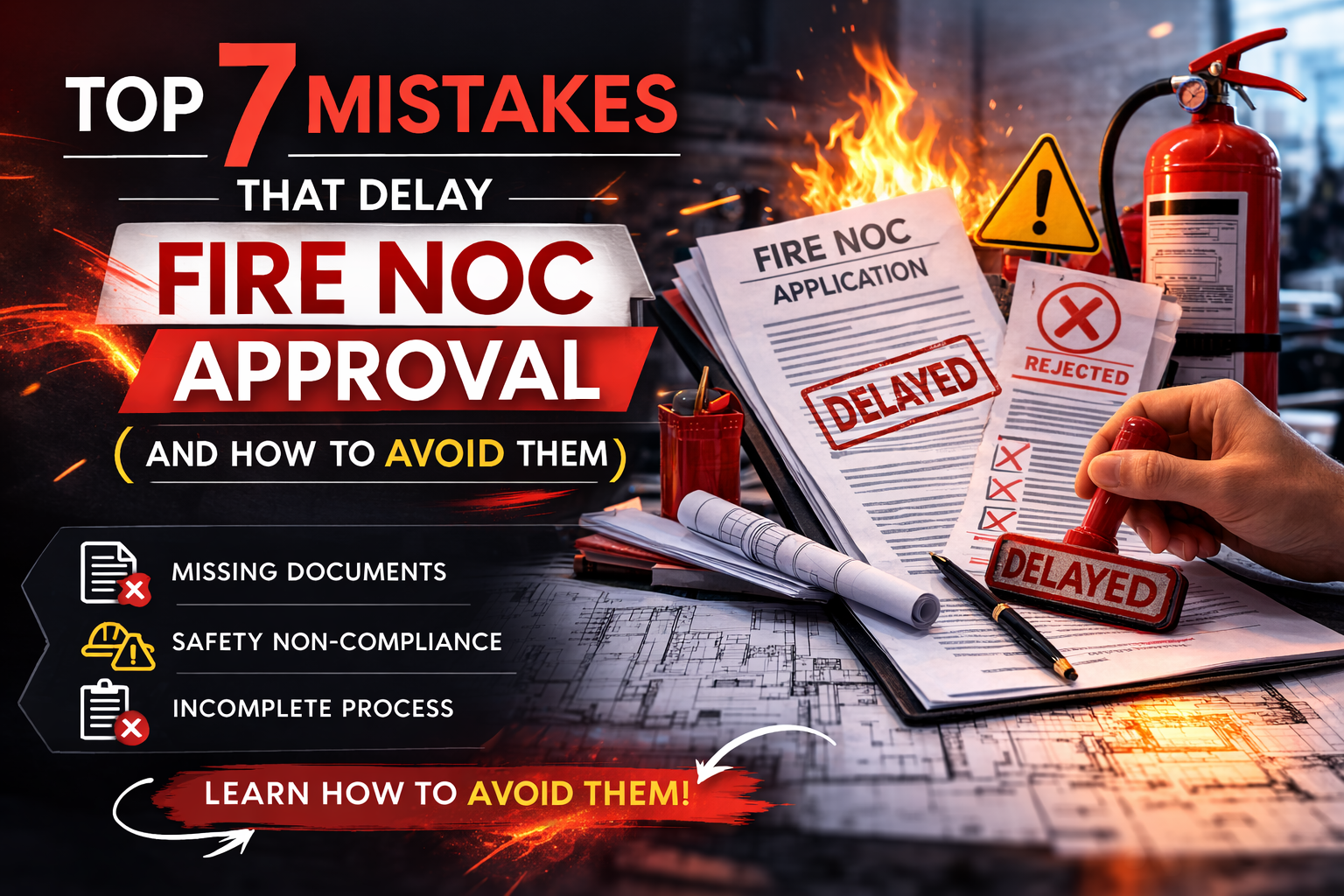
Top 7 Mistakes That Delay Fire NOC Approval (And How to Avoid Them)
Are you wondering why your Fire NOC application is stuck for weeks or even months? Are repeated site visits, document queries, or unclear remarks from authorities slowing you down? Delays in fire noc approval are more common than most building owners realize, and in many cases, the problem isn’t the system—it’s avoidable mistakes. Whether you’re applying for a new license or renewing an existing one, understanding what blocks fire noc approval can save you time, money, and compliance stress. If your project timeline depends on fire noc approval, knowing these common errors upfront is crucial.
1. Submitting Incomplete or Incorrect Documents
One of the biggest reasons applications get delayed is missing or mismatched paperwork. Authorities closely verify layouts, occupancy details, and safety system drawings. Even a small inconsistency can send your application back for correction.
How to avoid it:
Prepare all required fire noc documents in advance and cross-check them with the latest local requirements before submission.
2. Lack of Compliance with Approved Fire Safety Norms
Many applicants assume that installing basic equipment is enough. However, compliance is checked against sanctioned plans and prescribed safety standards.
How to avoid it:
Ensure your building strictly follows approved fire safety layouts and system specifications required for a valid fire safety noc.
3. Poor Understanding of the Fire NOC Process
Delays often happen when applicants are unaware of approval stages, inspection timelines, or authority expectations. This results in missed follow-ups and delayed responses.
How to avoid it:
Get clarity on the complete fire noc process, including online submission, inspection stages, and approval flow, before applying.
4. Fire Safety Systems Not Installed or Not Functional
During site inspections, authorities check whether systems like hydrants, fire alarms, and extinguishers are operational. Non-functional systems almost always lead to rejection or reinspection.
How to avoid it:
Test and commission all fire safety installations before the inspection by the fire department noc authorities.
5. Ignoring Fire Audit Recommendations
Skipping professional evaluation is a costly mistake. Many applicants apply without identifying gaps that inspectors later flag.
How to avoid it:
Conduct a fire audit for noc before submitting your application to identify and rectify non-compliances early.
6. Applying Without Occupancy-Specific Planning
Fire safety requirements vary based on building use—commercial, industrial, residential, or mixed occupancy. Applying under the wrong category causes unnecessary objections.
How to avoid it:
Ensure your application accurately reflects building usage, occupancy load, and risk category as per regulations.
7. Delayed Response to Authority Queries
Once objections are raised, slow replies or incomplete corrections extend approval timelines significantly.
How to avoid it:
Respond promptly to inspection remarks and submit clarifications or corrections within the given timeframe to keep fire noc approval on track.
Conclusion: Get It Right the First Time
Fire NOC delays don’t happen overnight—they’re usually the result of small but critical oversights. From documentation errors to poor system readiness, each mistake adds days or even months to your approval timeline. The smartest approach is preparation, fire safety compliance, and expert guidance. When you address gaps early and follow the right process, fire noc approval becomes smoother, faster, and stress-free—keeping your project legally compliant and ready to operate without last-minute hurdles.