
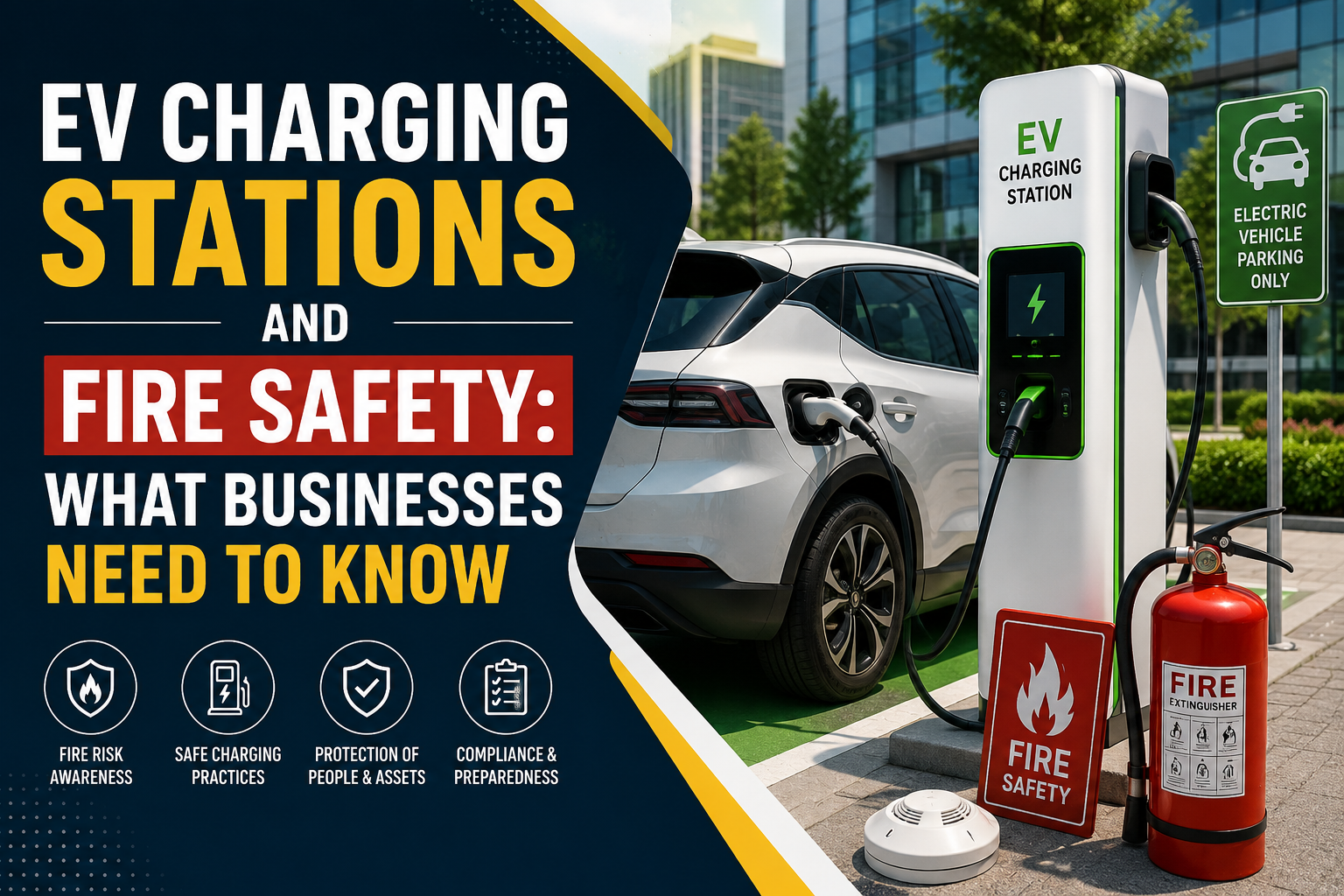
EV Charging Stations and Fire Safety: What Businesses Need to Know
The rapid adoption of electric vehicles (EVs) is transforming the way businesses operate. From office complexes and shopping malls to manufacturing facilities and commercial parking lots, EV charging stations are becoming a standard amenity. However, as organizations invest in charging infrastructure, understanding EV Charging Station Fire Safety becomes critical. Effective EV Charging Station Fire Safety measures help protect employees, customers, assets, and business operations from potential fire hazards. With the growing number of electric vehicles on the road, EV Charging Station Fire Safety should be a top priority for every business planning to install or expand charging facilities.
Why Fire Safety Matters in EV Charging Stations
Electric vehicles rely on high-capacity lithium-ion batteries that store significant amounts of energy. While EVs are generally safe, improper installation, equipment failure, damaged batteries, or electrical faults can increase fire risks. Businesses that provide charging facilities must ensure that their systems comply with safety standards and are designed to minimize potential hazards.
Fire incidents involving EVs are relatively rare, but when they occur, they can be challenging to control due to the nature of battery technology. Understanding these risks is the first step toward creating a safer charging environment.
Understanding Lithium-Ion Battery Fire Risks
One of the primary concerns associated with EV charging infrastructure is Lithium-Ion Battery Fire Risks. These batteries can experience a phenomenon known as thermal runaway, where excessive heat causes a chain reaction within battery cells. This can result in intense fires, smoke generation, and the release of hazardous gases.
Although battery manufacturers continue to improve safety features, businesses should remain vigilant by implementing preventive measures and emergency response plans.
Key Fire Hazards Associated with EV Charging Stations
1. Electrical System Failures
Faulty wiring, overloaded circuits, and poor-quality components can lead to overheating and electrical fires. Regular inspections and maintenance help identify issues before they become serious hazards.
2. Improper Installation
Charging stations should always be installed by qualified professionals who follow national and local electrical codes. Incorrect installation can compromise both operational performance and fire safety.
3. Physical Damage to Equipment
Vehicle collisions, vandalism, or environmental exposure can damage charging equipment. Damaged chargers may create electrical faults that increase fire risks.
4. Battery Damage
Accidents, manufacturing defects, or improper handling can damage EV batteries, potentially leading to dangerous situations during charging.
Best Practices for Commercial EV Charging Station Safety
Implementing strong Commercial EV Charging Station Safety practices helps businesses reduce risks and improve operational reliability. Key measures include:
- Conducting professional site assessments before installation.
- Using certified charging equipment from reputable manufacturers.
- Ensuring proper electrical load calculations.
- Providing adequate ventilation where required.
- Installing protective barriers around charging units.
- Scheduling regular inspections and preventive maintenance.
- Training staff on emergency response procedures.
These steps significantly reduce the likelihood of fire incidents and improve overall facility safety.
The Importance of EV Battery Fire Prevention
Proactive EV Battery Fire Prevention begins with proper charging practices. Businesses should encourage users to follow manufacturer guidelines and avoid using damaged charging cables or equipment.
Additional preventive measures include:
- Monitoring charging sessions through smart charging systems.
- Installing thermal monitoring devices where appropriate.
- Maintaining clear access for emergency responders.
- Establishing procedures for handling damaged or malfunctioning vehicles.
Prevention remains the most effective strategy for minimizing fire-related risks.
Promoting Electric Vehicle Charging Safety
As EV adoption continues to grow, businesses must prioritize Electric Vehicle Charging Safety by creating a safe and well-managed charging environment. Clear signage, user education, routine inspections, and compliance with safety standards all contribute to safer operations.
Organizations that take a proactive approach not only reduce fire risks but also build confidence among employees, customers, and visitors who rely on charging facilities.
Strengthening EV Charging Infrastructure Fire Protection
Modern EV Charging Infrastructure Fire Protection strategies involve more than simply installing charging stations. Businesses should integrate fire detection systems, emergency shutdown mechanisms, fire-resistant construction materials, and clearly defined emergency response plans into their charging infrastructure.
Collaboration between facility managers, electrical engineers, fire safety professionals, and local authorities can further enhance protection and ensure regulatory compliance.
Building a Safer Future for EV Charging
The expansion of electric mobility presents tremendous opportunities for businesses, but it also introduces new safety responsibilities. Investing in proper design, installation, maintenance, and emergency preparedness is essential for reducing fire risks and protecting valuable assets. Strong EV Charging Station Fire Safety practices not only safeguard people and property but also support long-term business resilience. As the demand for EV charging continues to rise, organizations that prioritize EV Charging Station Fire Safety today will be better prepared for the transportation landscape of tomorrow.
Conclusion
Electric vehicles are shaping the future of transportation, and businesses that embrace this transition must also embrace safety. By understanding fire risks, implementing preventive measures, and maintaining robust protection systems, organizations can create charging environments that are both efficient and secure. The road to a sustainable future starts with smart decisions—and when it comes to EV charging stations, safety should always be the firstcharge.