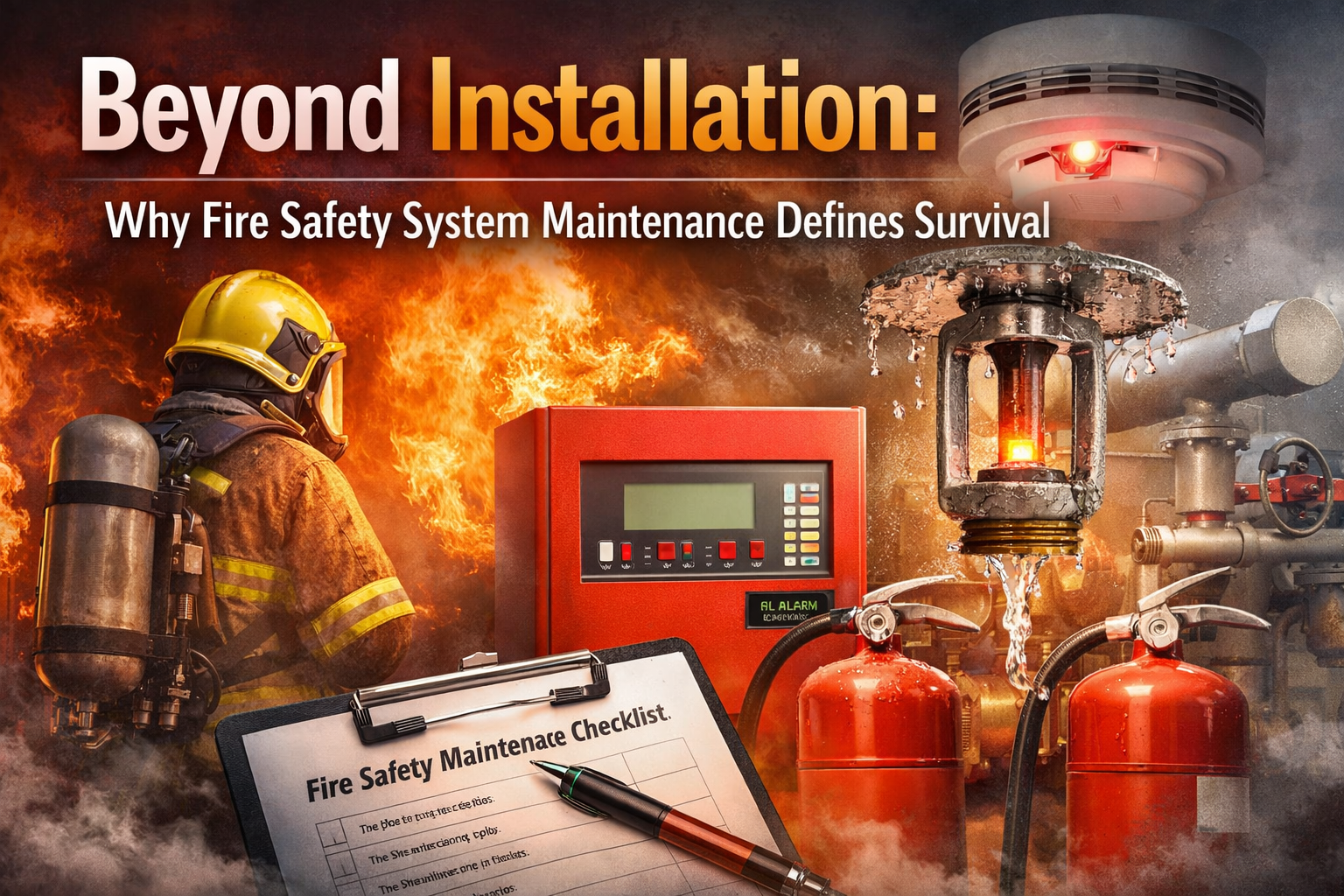
Beyond Installation: Why Fire Safety System Maintenance Defines Survival
Most organizations believe that once a fire protection system is installed, their responsibility ends there. But the reality is far more dangerous. Fire safety system maintenance is not just an optional task—it is the backbone of real protection. Without proper upkeep, even the most advanced systems can fail when they are needed the most. This is why fire safety system maintenance plays a critical role in ensuring safety, compliance, and survival during emergencies. Ignoring fire safety system maintenance can turn life-saving equipment into silent hazards waiting to fail.
Installation Is Just the Beginning
Installing fire safety systems such as alarms, sprinklers, and extinguishers is only the first step. Over time, these systems are exposed to dust, corrosion, electrical faults, and environmental wear and tear. Without regular checks, their efficiency drops significantly.
This is where the importance of fire safety system maintenance becomes clear. A well-maintained system ensures that every component—from sensors to suppression units—functions exactly as intended during a crisis.
Hidden Risks of Poor Maintenance
Neglected fire systems don’t just stop working—they create a false sense of security. Here are some common hidden risks:
- Blocked sprinkler heads due to dirt or paint
- Dead batteries in fire alarms
- Corroded pipes and valves
- Faulty detection sensors
- Expired or under-pressurized extinguishers
These issues often go unnoticed until an actual emergency occurs. By then, it’s too late.
Regular fire protection system servicing helps identify and fix these problems before they escalate into disasters.
Why Maintenance Defines Survival
During a fire emergency, seconds matter. A delayed alarm or a failed sprinkler system can mean the difference between containment and catastrophe.
Here’s how maintenance directly impacts survival:
1. Immediate Detection
Properly maintained alarms detect smoke or heat instantly, giving occupants crucial time to evacuate.
2. Effective Fire Suppression
Well-serviced sprinkler systems activate without delay, controlling or extinguishing the fire before it spreads.
3. System Reliability Under Pressure
In emergencies, systems operate under extreme conditions. Only regularly maintained equipment can withstand this pressure.
This is why fire safety system maintenance is not just about compliance—it’s about saving lives.
The Role of Preventive Maintenance
Waiting for a system to fail is never a strategy. Preventive maintenance ensures issues are identified early and resolved before they become critical.
A strong preventive maintenance for fire systems approach includes:
- Routine inspections
- Performance testing
- Cleaning and calibration
- Replacement of worn-out parts
- System upgrades when needed
Preventive care not only improves reliability but also extends the lifespan of fire safety equipment.
What Should a Maintenance Checklist Include?
A structured maintenance plan ensures nothing is overlooked. A proper fire safety equipment maintenance checklist should cover:
- Fire alarm functionality testing
- Sprinkler system pressure checks
- Fire extinguisher inspection and refilling
- Emergency lighting verification
- Control panel diagnostics
- Battery and power supply checks
Following a checklist helps maintain consistency and ensures all critical components are regularly evaluated.
Critical Systems That Need Regular Attention
Certain fire safety components require special focus due to their importance:
-Fire Alarms
Regular testing ensures sensors and alert systems function correctly during emergencies.
-Sprinkler Systems
Clogged or damaged sprinklers can fail to activate, allowing fires to spread rapidly.
This is why fire alarm and sprinkler maintenance must never be ignored. These systems are often the first line of defense in any fire incident.
Compliance Is Not Enough
Many businesses treat fire safety as a compliance requirement rather than a safety priority. While certifications and approvals are important, they do not guarantee system readiness.
Real safety goes beyond pa perwork. It requires consistent monitoring, testing, and improvement. Maintenance ensures that systems are not just compliant—but truly functional when needed.
The Cost of Neglect
Skipping maintenance may save money in the short term, but the long-term consequences can be devastating:
- Property damage worth millions
- Business downtime and financial loss
- Legal penalties and liabilities
- Loss of human lives
Investing in maintenance is far more cost-effective than dealing with the aftermath of a fire disaster.
How Experts Make the Difference
Professional fire safety experts bring technical knowledge, advanced tools, and experience to the table. They can identify risks that are often missed during basic inspections.
Expert servicing ensures:
- Accurate fault detection
- Compliance with safety standards
- Reliable system performance
- Peace of mind for occupants and management
Conclusion
Fire safety does not end with installation—it begins there. Systems that are not maintained properly can fail silently, putting lives and property at serious risk. The difference between safety and disaster often lies in how well your systems are maintained.
Regular inspections, timely servicing, and a proactive approach ensure that your fire protection systems perform when it matters the most. In the end, it’s not just about equipment—it’s about preparedness, reliability, and survival.