Is Your Fire Hydrant System Compliant?
Fire hydrant system compliance is not just a technical requirement—it is a life-saving responsibility for building owners, facility managers, and safety officers. Ensuring Fire hydrant system compliance means your premises are prepared to respond effectively during large fire emergencies. Unfortunately, many buildings assume they are safe without actually verifying Fire hydrant system compliance, which can lead to system failure when it matters most.
Understanding the Role of a Fire Hydrant System
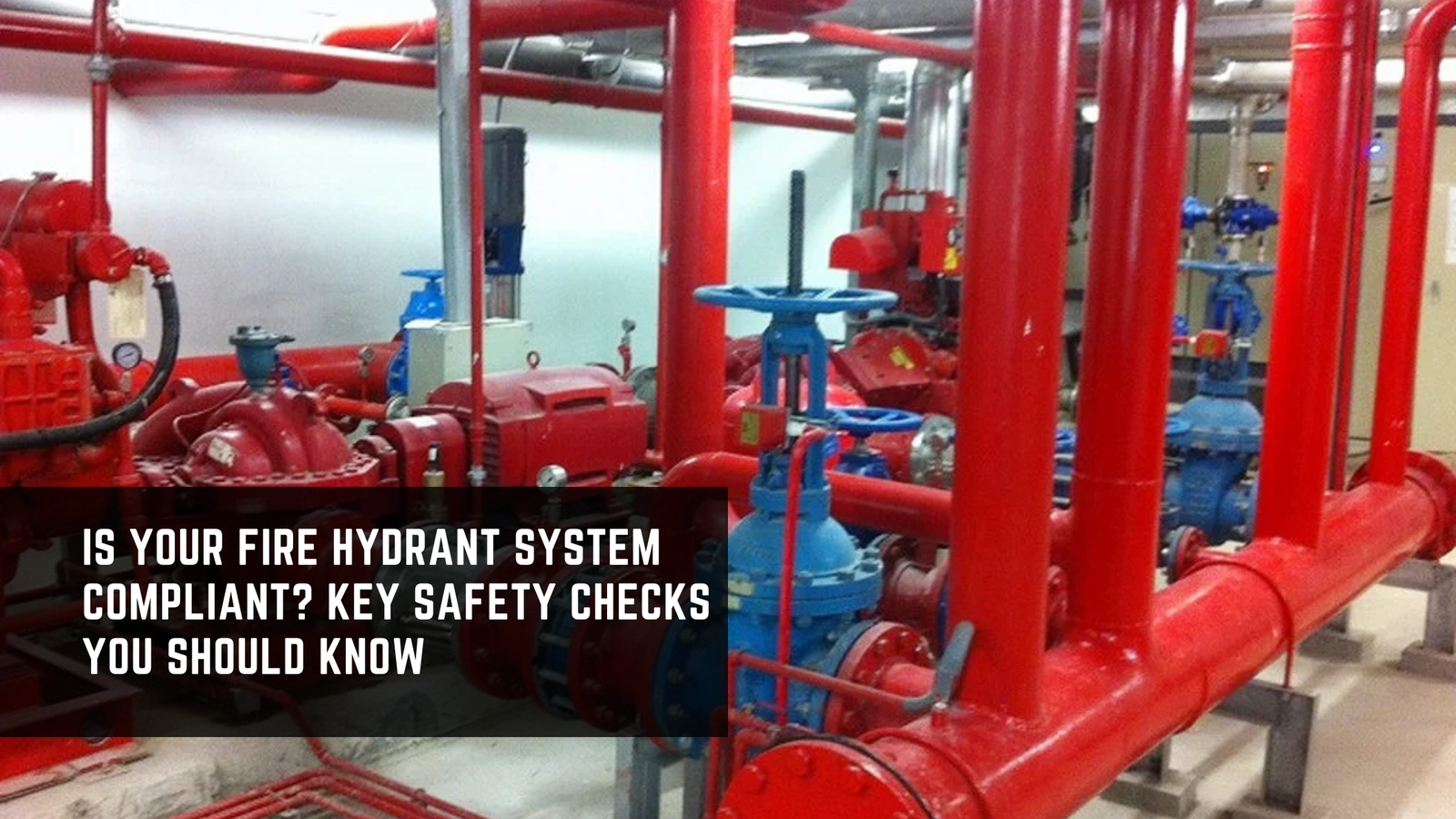
A Fire hydrant system is designed to supply a continuous and high-pressure water flow to control fires that cannot be managed by portable extinguishers. It forms the backbone of active fire defense in commercial buildings, factories, hospitals, malls, and high-rise structures. When properly designed and maintained, it enables firefighting teams to act quickly and decisively, preventing fire escalation and structural damage.
Why Fire Safety Norms Matter
Compliance with Fire safety norms ensures that your hydrant system meets legal, operational, and safety benchmarks set by authorities. These standards define requirements such as water storage capacity, pump pressure, pipe sizing, and hydrant placement. Ignoring these norms not only puts lives at risk but can also result in penalties, insurance rejection, and project approval delays.
Hydrant Inspection: The First Line of Assurance
Routine Hydrant inspection is essential to confirm that every component functions as intended during an emergency. Inspections should cover pumps, valves, hoses, landing valves, pressure gauges, and water tanks. Even a minor fault—such as a seized valve or pressure drop—can render the entire system ineffective during a fire incident.
Key Components That Demand Attention
A reliable Fire protection system depends on the seamless coordination of its parts. Fire pumps must start automatically, pipelines must be leak-free, and hydrant outlets must be easily accessible. Clear signage, unobstructed access routes, and trained personnel further enhance system readiness and ensure fast emergency response.
Common Compliance Gaps You Should Watch For
Many buildings fail compliance checks due to poor maintenance, unauthorized layout changes, or neglected testing schedules. Issues like inadequate water pressure, corroded pipelines, or blocked hydrant points are common but avoidable. Addressing these gaps proactively strengthens overall Fire safety compliance and reduces long-term risk.
Maintenance Is the Key to Long-Term Reliability
A hydrant system is not a “set and forget” installation. Scheduled testing, pressure checks, and documentation ensure continued reliability. Regular maintenance also helps detect wear and tear early, preventing costly repairs and unexpected failures during critical situations.
Conclusion: Safety Begins with Compliance
Fire emergencies don’t give second chances—and neither should your safety systems. Prioritizing Fire hydrant system compliance ensures faster firefighting response, protects lives, and safeguards assets. By staying proactive, conducting regular inspections, and adhering to standards, you turn compliance into confidence—because when fire strikes, preparedness makes all the difference.