
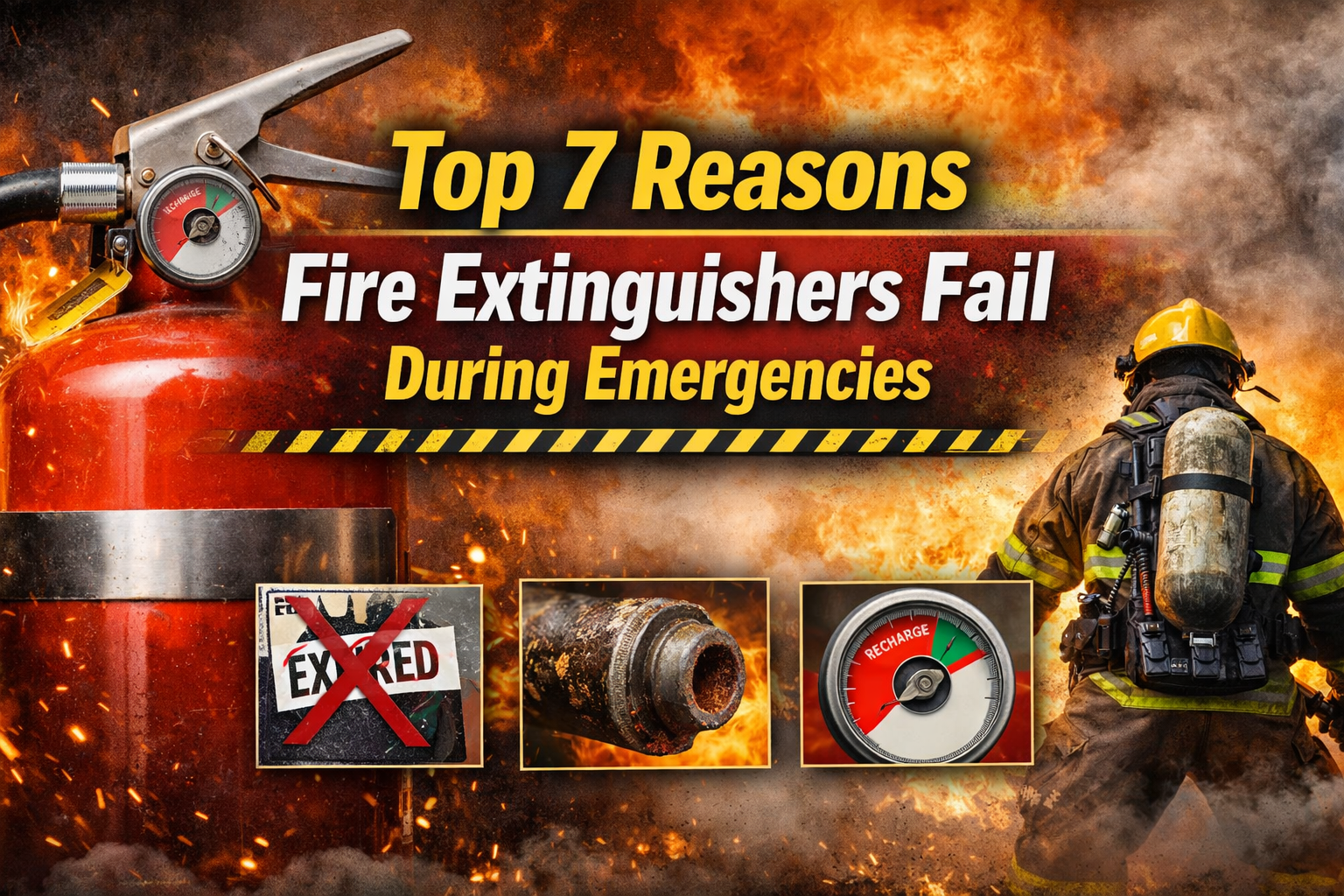
Top 7 Reasons Fire Extinguishers Fail During Emergencies
When a fire breaks out, a fire extinguisher is often the first line of defense. But what happens when it doesn’t work? Understanding the fire extinguisher failure reasons can be the difference between a small incident and a devastating disaster. Many people assume extinguishers will always function perfectly, yet several hidden fire extinguisher failure reasons can render them useless at critical moments. Knowing these fire extinguisher failure reasons is essential for every home, office, and industrial space.
Let’s break down the most common causes and how you can avoid them.
1. Lack of Regular Maintenance
One of the biggest fire extinguisher maintenance issues is neglect. Extinguishers require periodic inspection to ensure they are fully functional. Without maintenance:
- Pressure levels may drop
- Seals can weaken
- Internal components may corrode
Tip: Schedule monthly visual checks and annual professional servicing.
2. Expired or Outdated Equipment
Fire extinguishers don’t last forever. Over time, their effectiveness reduces due to:
- Chemical degradation
- Loss of pressure
- Wear and tear
Ignoring expiry dates is one of the top fire extinguisher not working causes during emergencies.
3. Incorrect Type of Fire Extinguisher
Not all fires are the same. Using the wrong extinguisher can make things worse. This is one of the key why fire extinguishers fail in emergencies scenarios:
- Water extinguishers on electrical fires = dangerous
- Foam on oil fires = ineffective
Tip: Always match extinguisher type (A, B, C, K) with fire risk.
4. Blocked or Damaged Nozzle
A clogged or damaged nozzle prevents the extinguishing agent from discharging properly. Common causes include:
- Dust accumulation
- Insect nests
- Physical damage
This is among the most overlooked common fire extinguisher problems.
5. Loss of Pressure
Fire extinguishers rely on internal pressure to release the extinguishing agent. If pressure drops:
- The extinguisher won’t discharge
- The spray may be too weak
Checking the pressure gauge regularly helps avoid such fire extinguisher failure reasons.
6. Improper Storage Conditions
Where you store your extinguisher matters. Exposure to:
- Extreme heat
- Moisture
- Direct sunlight
can damage internal components and reduce effectiveness. This contributes significantly to fire safety equipment failure reasons.
7. Lack of User Training
Even a perfectly working extinguisher can fail if the user doesn’t know how to operate it. Panic and improper handling lead to:
- Delayed response
- Incorrect usage technique
Remember the PASS method:
- Pull the pin
- Aim at the base
- Squeeze the handle
- Sweep side to side
Final Thoughts: Don’t Let Failure Cost You Everything
A fire extinguisher is only as reliable as the care and knowledge behind it. Most failures aren’t due to manufacturing defects—they’re preventable mistakes. By understanding these risks and taking proactive steps, you ensure your safety equipment works when you need it most.
Because in an emergency, seconds matter—and a failed extinguisher is not an option. Stay prepared, stay protected.